.svg)
|
Gold Standard Phantoms
|
Document ID: PD-3004-4011
|
| Revision | Summary | Date |
|---|---|---|
| 1.0 | First issue | 10 Feb 2025 |
| 1.1 | Updating to include SPECTRE Onco information | 3 Sep 2025 |
| 1.2 | AR address update | 19 Dec 2025 |
| 1.3 | Updating SPECTRE & Onco information | 4 Feb 2026 |
Foreword
These instructions for use contain all the information necessary to operate the SPECTRE, SPECTRE Pico and SPECTRE Onco phantoms in accordance with its specifications. This information includes explanations of the functions of the controls, displays and signals, the sequence of operation, and connection and disconnection of the parts and accessories you can remove.
You must regard these instructions as a part of the equipment. It is important that these instructions are read thoroughly.
For the purposes of this document, the SPECTRE, SPECTRE Pico and SPECTRE Onco phantoms are collectively referred to as the SPECTRE phantoms, unless otherwise specified.
Disclaimer
Gold Standard Phantoms considers itself responsible for the effects on safety, reliability, and performance of the equipment only if:
-
Assembly operations, re-adjustments, modification or repairs are carried out by persons authorised by ourselves, and
-
The electrical installation of the room where the device is used meets the requirements of the standards in force, and
-
The device is used in accordance with this instruction manual.
Glossary and Abbreviations
|
Term |
Description |
|---|---|
|
2HG |
2‑Hydroxyglutarate, an oncometabolite associated with isocitrate dehydrogenase (IDH)–mutant brain tumours. |
|
Adverse event |
Any undesirable medical occurrence or incident associated with the use of the device, whether or not considered device‑related. |
|
Cho (Choline) |
A metabolite involved in cell membrane synthesis; in MRS, choline levels can reflect cell membrane turnover. |
|
Cr (Creatine) |
metabolite related to energy metabolism; in MRS it is often used as a reference metabolite. |
|
DTPA |
Diethylenetriamine pentaacetic acid, a chelating agent; in this device it is complexed with gadolinium to adjust relaxation times. |
|
EU Authorised Representative |
The legal entity within the European Union appointed by the manufacturer to act on its behalf for regulatory purposes. |
|
GABA (gamma‑aminobutyric acid) |
An inhibitory neurotransmitter; included in the phantom to test standard and J‑edited MRS methods. |
|
Gadolinium DTPA |
A gadolinium‑based contrast agent (gadolinium chelated by DTPA) used here to adjust T1/T2 relaxation times into a physiological range. |
|
Glu (Glutamate) |
major excitatory neurotransmitter; in MRS it is an important brain metabolite marker. |
|
HDPE (High Density Polyethylene) |
A durable plastic used for the phantom’s hollow spherical shell. |
|
IDH mutation |
Mutation in the isocitrate dehydrogenase (IDH) gene; associated with production of 2‑hydroxyglutarate in certain brain tumours. |
|
Ins (myo‑Inositol) |
sugar alcohol metabolite; in MRS it can act as a marker for glial cells and osmoregulation. |
|
Isocentre (magnet isocentre) |
The exact centre of the MRI magnet and gradient fields, where imaging and spectroscopy are most homogeneous and accurate. |
|
J‑edited MRS |
Spectroscopic techniques (e.g. MEGA‑PRESS) that use J‑coupling editing pulses to isolate specific metabolite signals such as GABA. |
|
Lac (Lactate) |
A metabolite of anaerobic metabolism; elevated lactate can indicate hypoxia or tumour metabolism in MRS. |
|
LASER |
Localization by Adiabatic SElective Refocusing, an MRS localization sequence used to define the volume of interest. |
|
MEGA‑PRESS |
A J‑edited MRS sequence (MEscher–GArwood Point RESolved Spectroscopy) commonly used for GABA and 2HG detection. |
|
Metabolite |
small molecule involved in biochemical processes; in MRS, specific metabolites are measured to assess tissue status. |
|
MRI |
Magnetic Resonance Imaging, a technique that creates anatomical and sometimes functional images using magnetic fields and radiofrequency pulses. |
|
MR |
Magnetic Resonance, the physical phenomenon underlying MRI and MRS techniques. |
|
MRS |
agnetic Resonance Spectroscopy, an MR technique that measures metabolite concentrations rather than producing conventional images. |
|
NAA (N‑Acetyl‑L‑aspartic acid) |
neuronal metabolite; in MRS it is often used as a marker of neuronal integrity. |
|
Oncometabolite |
A metabolite whose abnormal accumulation is associated with tumour development or progression (e.g. 2‑hydroxyglutarate). |
|
Phantom (Quality Assurance device) |
A physical test object that mimics certain properties of human tissue, used to assess and monitor MRI/MRS system performance. |
|
pH |
A measure of acidity or alkalinity; in this context it indicates the acidity of the phantom solution (pH 7.4 ≈ physiological). |
|
Potassium phosphate |
A buffering salt (containing phosphate) used to stabilise pH in the phantom solution. |
|
PRESS |
Point RESolved Spectroscopy, a common single‑voxel MRS localization sequence. |
|
QA (Quality Assurance) |
Systematic procedures and measurements to ensure that MRI/MRS systems perform safely, reliably, and within specified limits. |
|
Quality Assurance device |
A device (phantom) specifically designed to perform QA measurements on MRI/MRS systems. |
|
RF coil (Radiofrequency coil) |
The component of the MRI system used to transmit RF pulses and/or receive MR signals from the phantom or patient. |
|
RMA (Return Merchandise Authorisation) |
A formal process by which a device is returned to the manufacturer for repair, replacement, or evaluation. |
|
SMW (Standard Manufacturer’s Warranty) |
The standard warranty period and conditions under which the manufacturer repairs or replaces the device. |
|
SPECTRE |
Spectroscopy Reference Phantom containing brain‑relevant metabolites at physiological concentrations for MRS QA. |
|
SPECTRE Onco |
Variant of the SPECTRE phantom that additionally contains 2‑hydroxyglutarate to simulate IDH‑mutant brain tumours. |
|
SPECTRE Pico |
smaller‑form‑factor member of the SPECTRE phantom family, designed for MRS Quality Assurance. |
|
Thermal equilibrium |
The state in which the phantom’s temperature has stabilised to match the surrounding environment, improving measurement stability and reproducibility. |
Introduction
About this Instruction Manual
The purpose of this instruction manual is to promote the safe use of a SPECTRE, SPECTRE Pico or SPECTRE Onco phantom during its expected service life.
It describes the use of the device as intended by the manufacturer.
Identification
Product Name: Spectroscopy Reference Phantom Family (SPECTRE)
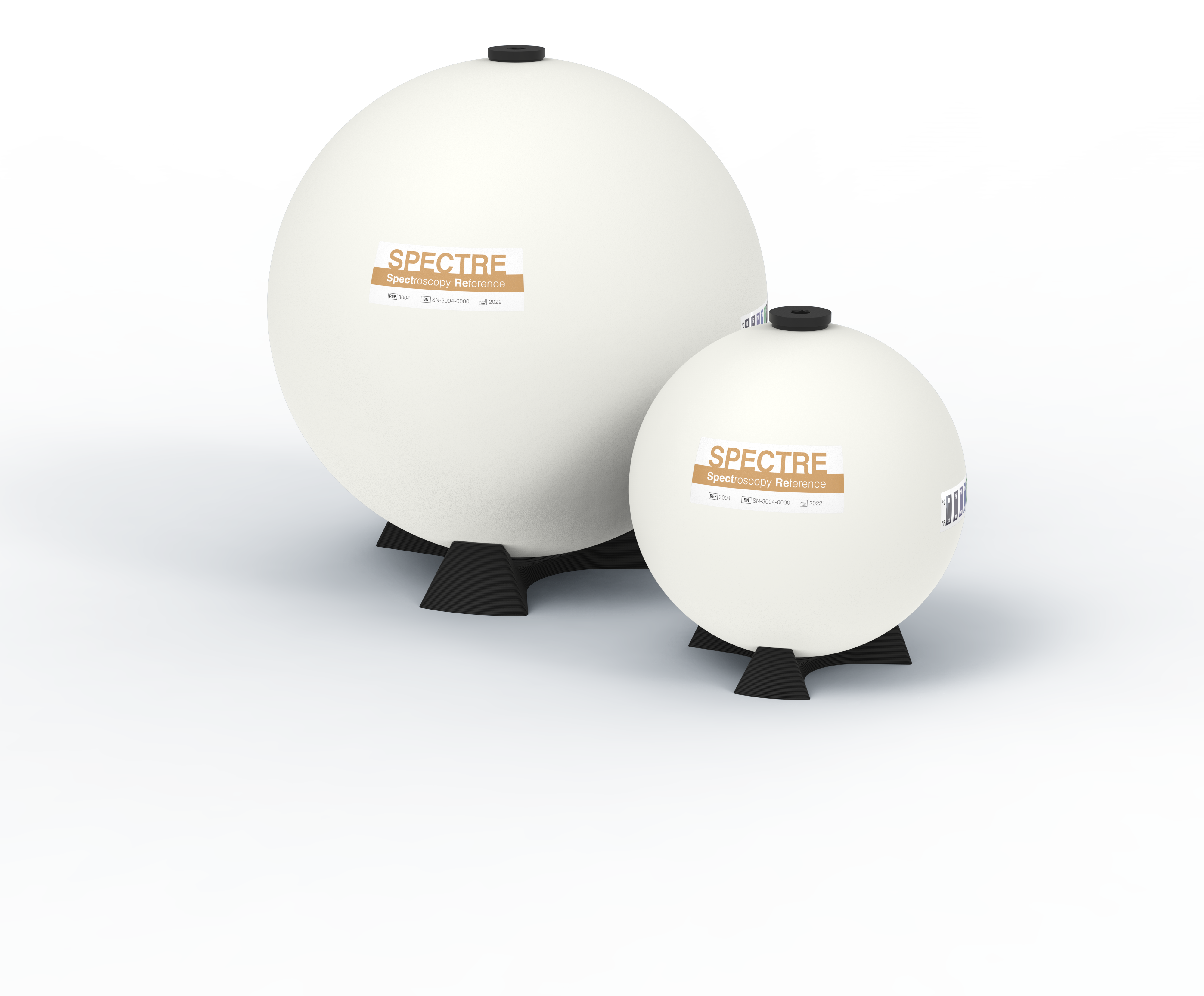
Manufacturer and Contact Information
|
Company Identification |
Gold Standard Phantoms Limited
|
|
Telephone |
+44 (0)114 3271540 |
|
Email (competent person) |
|
|
Languages spoken |
English |
|
EU Authorised Representative |
AR Experts B.V. |
|
EU Authorised Representative Address |
AR Experts B.V. Boeingavenue 201-219 1119 PD Schiphol-Rijk The Netherlands |
|
EU Authorised Representative Email Address |
Intended Use
The SPECTRE, SPECTRE Pico and SPECTRE Onco phantoms are designed for Quality Assurance measurements of Magnetic Resonance Spectroscopy (MRS). Phantoms (also known as Quality Assurance Devices) are used in lieu of a human being inside an MRI scanner to assess its performance. The user should refer to the MRI device’s instructions for use to set up the correct pulse sequence for a given outcome. Equivalent acquisition techniques need to be used on the phantom as in the humans / patients.
Intended User
The SPECTRE phantoms are intended for use by qualified MRI system operating personnel. These devices must be used by competent personnel who have the applicable education and experience. This includes but is not limited to:
-
Radiographer/MRI Technologist
-
Clinical Scientist/Hospital Physicists
-
MRI Physicist
-
Radiologist
-
Students/Researcher
-
Other trained Medical Professional.
A device from this family must be used by a skilled person who has the applicable education and experience to enable them to perceive risks and to avoid hazards which operation or maintenance of the device can create.
Warnings and Cautions Used
Essential safety descriptions are provided in the instruction manual in the form of either a Warning or a Caution, as described below:
A WARNING is given when the personal safety of the participant or a user can be affected. Disregarding this advice can cause an injury.
A CAUTION is given when special instructions must be followed. Disregarding this advice can cause damage to the device or other equipment.
All users must familiarise themselves with all the warnings and cautions contained in the instructions before using this device.
Device Description
About the SPECTRE, SPECTRE Pico and SPECTRE Onco Phantoms
SPECTRE
The SPECTRE (Spectroscopy Reference), and SPECTRE Pico phantoms are designed for Quality Assurance measurements of Magnetic Resonance Spectroscopy (MRS). Each of them contains a set of metabolites found within the brain at physiological concentrations and pH, all housed within a HDPE spherical shell. The SPECTRE phantoms use a set of metabolites typically used in MRS QA; with the addition, in all three phantoms, of GABA (gamma-Aminobytyric acid) at 2mM, to allow performance testing of both standard (e.g. PRESS, LASER) and J-edited (e.g. MEGA-PRESS) MRS acquisitions.
|
Metabolite |
Abbreviation |
Nominal Concentration |
|---|---|---|
|
N-Acetyl-L-aspartic acid |
NAA |
12.5 mM |
|
Creatine |
Cr |
10.0 mM |
|
Choline |
Cho |
3.0 mM |
|
myo-Inositol |
Ins |
7.5 mM |
|
Glutamate |
Glu |
12.5 mM |
|
Lactate |
Lac |
5.0 mM |
|
gamma-Aminobutyric acid |
GABA |
2.0 mM |
SPECTRE Onco
In addition to the metabolites contained in the SPECTRE phantoms, the SPECTRE Onco phantom also contains 5mM of the oncometabolite 2-Hydroxyglutarate, present in brain tumours with an IDH mutation.
|
Metabolite |
Abbreviation |
Nominal Concentration |
|---|---|---|
|
N-Acetyl-L-aspartic acid |
NAA |
12.5 mM |
|
Creatine |
Cr |
10.0 mM |
|
Choline |
Cho |
3.0 mM |
|
myo-Inositol |
Ins |
7.5 mM |
|
Glutamate |
Glu |
12.5 mM |
|
Lactate |
Lac |
5.0 mM |
|
gamma-Aminobutyric acid |
GABA |
2.0 mM |
|
2-Hydroxyglutarate |
2HG |
5.0 mM |
Concentration Accuracy
The concentrations given in the above tables are nominal. Due to manufacturing tolerances, and variations in purity between different batches of raw materials, the absolute concentrations of the metabolites in each batch of liquid will not be exactly these nominal concentrations, and will vary by as much as 10%. A 50ml vial of the same liquid that is in each phantom is supplied with each phantom, for the user to conduct further analysis if required.
For multi-centre trials where it is important that all phantoms are identical, it is possible to make multiple phantoms from the same batch of liquid. Please contact Gold Standard Phantoms for more information.
Materials
|
Component |
Materials Used |
|---|---|
|
Hollow Plastic Sphere |
High Density Polyethylene (HDPE) |
|
Cap |
Nylon, nitrile rubber |
|
Phantom liquid (SPECTRE) |
Distilled Water, Potassium Phosphate Monobasic, Sodium Hydroxide, N-Acetyl-L-aspartic acid, Creatine, Choline Chloride, Myo-Inositol, L-Glutamic acid, L-Lactic acid lithium salt, Gamma-Aminobutyric Acid, preservative (methylisothiazolinone and chloromethylisothiazolinone), Gadolinium DTPA Sodium Salt |
|
Phantom liquid (SPECTRE Onco) |
Distilled Water, Potassium Phosphate Monobasic, Sodium Hydroxide, N-Acetyl-L-aspartic acid, Creatine, Choline Chloride, Myo-Inositol, L-Glutamic acid, L-Lactic acid lithium salt, Gamma-Aminobutyric Acid,D-alpha-Hydroxyglutaric Acid Disodium Salt, preservative (methylisothiazolinone and chloromethylisothiazolinone), Gadolinium DTPA Sodium Salt |
WARNING:
Contains 5-chloro-2-methyl-4-isothiazolin-3-one and 2-methyl-4-isothiazolin-3-one (3:1). May produce an allergic reaction.
The phantom liquid is a mild irritant and may be skin sensitising. In the event of a leak or spill of the phantom liquid wear protective waterproof gloves when cleaning any spillages and dispose according to local regulations. See the safety data sheet for more information.
Storage Instructions
Store
-
In a dry and well-ventilated environment
-
Between 15 °C and 30 °C
-
Out of direct sunlight
If possible, store the phantom in the MRI magnet room. This will ensure that it is at thermal equilibrium with the room and provide the most reliable and reproducible results. Either store in the supplied box, or use the supplied stand to store on a flat surface such as a shelf.
Cleaning
If the SPECTRE phantoms require cleaning, they can be cleaned with soap, water, and a soft cloth or sponge to remove dirt and debris. Organic solvents such as isopropanol may be used to remove sticky residue on the HDPE sphere, however these may cause the labels to stop adhering to the surface.
Operating Instructions
Unpacking
The SPECTRE phantoms are supplied in a protective cardboard packaging box. To unpack:
-
Inspect the outer packaging. If any damage is present do not use the device. Please contact Gold Standard Phantoms.
-
Remove each component from the box.
-
Inspect each component for damage. If any damage is present do not use the device. Please contact Gold Standard Phantoms.
-
Carefully remove the outer packaging. Do not use a sharp knife in case this cuts or punctures the device.
WARNING: The SPECTRE phantom weighs over 3 kg and will cause injury if dropped on bare feet or feet with open toed shoes. Take appropriate care when handling the phantom and wear suitable shoes that provide protection.
Use
-
Place the on the MRI scanner couch in close proximity to the RF coil that is being used. It may help to use foam pads provided with the MRI scanner to aid positioning
-
Align the MRI system’s laser with the middle of the phantom.
-
Move the phantom to magnet isocentre.
-
Begin the MR examination.
-
When finished store the phantom.
Adverse Events
Any adverse events that occur during the use of this device should be reported both to Gold Standard Phantoms and the relevant Competent Authority of the member state.
Warranty
Standard Manufacturer’s Warranty (SMW)
The phantoms carry as 1 year manufacturer’s warranty. This covers assurance regarding quality / lifespan with a promise to repair or replace the SPECTRE/SPECTRE Pico/SPECTRE Onco phantom under a standard RMA (return merchandise authorisation). Shipping and Duty charges may apply.
Disposal
Do not allow the contents of the phantom to enter drains, sewers, or watercourses. Dispose of this material and its container as hazardous waste. Disposal should be in accordance with local, state, or national legislation.
Citations